
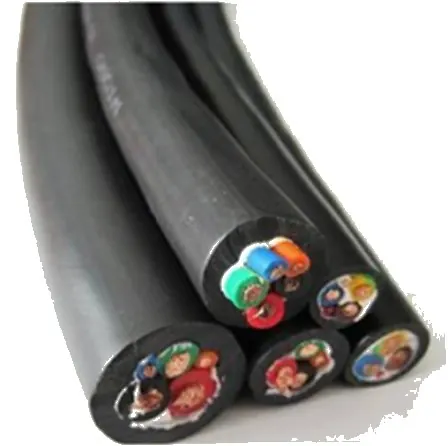
H07RN-F is a 450/750 V heavy-duty flexible rubber cable with class 5 copper, EPR insulation and a polychloroprene sheath, typically -25 to +60 C, 1-5 cores and 1.5-95 mm2. It is used for site, workshop, outdoor and portable equipment connections. Where silicone cable vs PVC cable high temperature is the deciding factor, silicone types tolerate about 180 C; ordinary PVC is generally limited near 70 C.
H07RN-F cable applications: what the harmonised rubber flexible cable is built for
A harmonised H07RN-F cable is a heavy-duty flexible cord built for movement and rough service, not a fixed building wire. Its typical construction is class 5 fine-strand copper, ethylenepropylene rubber (EPR) insulation and a polychloroprene (PCP) sheath, rated 450/750 V, with 1-5 cores and cross sections from 1.5 to 95 mm2 in the range we list. The published temperature range is -25 C to +60 C at the conductor. That combination explains why it is specified where a cable is plugged in, dragged over a site, wetted, or exposed to oil and weather. Ask for the datasheet before assuming every supplier's construction is identical.
Typical H07RN-F cable applications include temporary site distribution and portable tools on construction sites, workshop and maintenance supply, outdoor and agricultural equipment, pumps, compressors and mobile plant. The PCP sheath gives oil and weather resistance, and the construction tolerates repeated handling at low temperature. It is a flexible connection cable: use it where the cable is moved occasionally, coiled and reconnected. It is not a substitute for fixed-installation building wiring, a screened instrumentation circuit, or a cable designed to travel millions of cycles in a moving carrier. Keeping those categories separate prevents most misapplications.
The designation sits in the IEC 60245 rubber-insulated family. IEC 60245-4:2026 sets the particular requirements for cords and flexible cables up to 450/750 V, and it must be read together with IEC 60245-1. In Europe, EN 50525-2-21 and HD 22.4 are the harmonised references buyers usually see on a datasheet. Our H07RN-F range is CE marked to the Low Voltage Directive 2014/35/EU with an identified notified-body file; certificate copies are available on request. Treat the standard reference as a starting point and verify the exact test reports for the cable you are buying.
Silicone cable vs PVC cable high temperature: where the real limits sit
Where a circuit runs hotter than about +60 C at the conductor, H07RN-F is no longer the right insulation system. The common comparison is silicone cable vs PVC cable high temperature performance. General PVC-insulated flexible cords are normally rated around 70 C conductor temperature; at sustained higher heat PVC softens and its mechanical protection falls away. Silicone rubber insulation behaves very differently: our YGC / YGCB silicone rubber cable is rated up to 0.6/1 kV with a maximum temperature of 180 C and class 5 flexible copper, which is why it appears in furnaces, ovens, lighting and rolling-stock wiring.
For buyers asking what temperature can silicone rubber cable withstand, the honest answer is: read the specific datasheet. Silicone compounds are commonly used well above 100 C, and our published ceiling is 180 C for the YGC family; other designs may be lower. Also check the sheath, terminations and cable glands - the insulation temperature rating does not automatically transfer to the whole installation. Voltage class matters too: H07RN-F is 450/750 V, while the silicone range we list goes up to 0.6/1 kV. Neither figure tells you the ampacity; size the conductor from load current, voltage drop and correction factors.
The trade-off is mechanical. Silicone is softer and more easily cut or abraded than a PCP-sheathed rubber cable, so routes through sharp metalwork need extra protection, and it is typically a premium product. Choose H07RN-F for rough, wet, oily, moderate-temperature flexibility; choose PVC where cost dominates and 70 C is genuinely enough; choose silicone where continuous high temperature is the governing constraint. A catalogue label that only says 'heat resistant' is not a specification - require the continuous conductor temperature, the voltage rating and the relevant test evidence in writing.
How to specify H07RN-F or a high-temperature alternative for your market
A workable specification starts with five inputs: voltage and frequency, load current and run length, number of conductors including protective earth, temperature at the conductor and at the surface, and the mechanical duty. For H07RN-F, confirm 1-5 cores and 1.5-95 mm2 availability, then apply correction factors for ambient temperature, bundling and installation method rather than copying a single ampacity table. If the cable follows a machine axis, specify a tested drag chain cable with a stated bend radius and cycle life; an ordinary rubber flexible cord is not certified for that duty by virtue of being flexible.
Also separate outdoor durability from chemical exposure. PCP sheathing handles oil and weather well, but aggressive chemicals, strong UV or prolonged immersion should be checked against the compound's test data. In cold stores or outdoor winter work, verify flexibility at the minimum site temperature against the -25 C rating. Where fire spread or smoke is contractually controlled, ask for the relevant flame-propagation result rather than assuming every rubber sheath meets the same class. For solar or photovoltaic circuits, use a dedicated PV cable rated for the array voltage and outdoor exposure; H07RN-F is not a PV-string cable.
Finally, request a compact document pack: technical datasheet with exact ratings, type-test results for conductor resistance and voltage withstand, oil and flame test evidence where relevant, and the conformity declaration naming the applicable directive or standard. Send your circuit data, installation conditions and destination market to info@chuangshengcable.com or WhatsApp +86 17112662227 and we will confirm which construction fits before quotation.
Frequently asked questions
What are the main H07RN-F cable applications?
H07RN-F is used for heavy-duty flexible connections on construction sites, in workshops, outdoors and on agricultural or mobile equipment. It is typically 450/750 V, 1-5 cores, 1.5-95 mm2, with EPR insulation, a PCP sheath and a -25 to +60 C temperature range.
What temperature can silicone rubber cable withstand?
Our YGC / YGCB silicone rubber cable is published with a maximum temperature of 180 C and rated voltage up to 0.6/1 kV. That is far above the +60 C conductor limit of H07RN-F and the roughly 70 C typical limit of general PVC flexible cable. Always confirm the exact datasheet and the rating of terminations.
How do I choose between silicone cable and PVC cable for high temperature?
Compare continuous conductor temperature first: around 70 C for general PVC versus about 180 C for the silicone cable we list. Then check voltage class, abrasion and cut resistance, mechanical protection, terminations and cost. Silicone is not automatically better in every way - it is softer and usually more expensive, so use it where heat really governs.
Is H07RN-F suitable for drag chains or solar panel wiring?
No. H07RN-F is a flexible connection cable for occasional movement, not a cable qualified for millions of bend cycles in a drag chain. Solar strings also need a dedicated photovoltaic cable rated for array voltage and outdoor exposure. Ask for tested bend-cycle data or PV-rated product data before specifying either duty.
Sources & attributed quotations
“IEC 60245-4:2026 defines the particular requirements for rubber insulated and braided cords and for rubber insulated and rubber or polychloroprene or other equivalent synthetic elastomer sheathed cords and flexible cables of rated voltages up to and including 450/750 V which apply in addition to the general requirements specified in IEC 60245-1, which apply to all cables.”
— International Electrotechnical Commission, IEC 60245-4:2026 (Edition 4.0), Rubber insulated cables - Rated voltages up to and including 450/750 V - Part 4: Cords and flexible cables · official source
“IEC 60245-1:2026 applies to rigid and flexible cables with insulation, and sheath if any, based on vulcanized rubber of rated voltages Uo/U up to and including 450/750 V used in power installations of nominal voltage not exceeding 450/750 V AC.”
— International Electrotechnical Commission, IEC 60245-1:2026 (Edition 5.0), Rubber insulated cables - Rated voltages up to and including 450/750 V - Part 1: General requirements · official source